
The Complete Guide to Commercial Kitchen Flooring in NJ

Every food service operator in New Jersey knows the challenge. Your kitchen works hard from before sunrise to well past dinner service. The floors take the brunt of it all, every single day. Commercial kitchen flooring in NJ needs to meet a very specific set of demands that most standard flooring solutions simply weren’t designed to handle. If you’ve been putting off addressing your kitchen floor, this guide covers everything you need to make the right call.
What Are the Biggest Threats to a Commercial Kitchen Floor?
A kitchen floor endures things that would destroy ordinary flooring within months. Hot water from pot washing stations hits the surface repeatedly throughout the day. Cooking oils and grease create serious slip hazards within hours of cleaning. Chemical sanitizers, used multiple times per day, eat through surfaces that aren’t built with chemical resistance in mind. Heavy equipment rolls across the floor constantly, and kitchen staff stand on it for eight to twelve hour shifts without stopping.
Standard ceramic tile cracks under thermal shock. Vinyl sheet flooring peels at the seams when exposed to prolonged moisture and chemicals. Concrete without a protective coating absorbs grease and bacteria into its porous surface. None of these options meet the durability, hygiene, and safety standards that a serious food service operation requires. That’s exactly why professional epoxy systems have become the preferred choice for kitchen operators who understand what their floors actually go through.
How Does Epoxy Handle Thermal Shock in a Kitchen Environment?
Thermal shock happens when a floor is exposed to dramatic temperature changes in a short period of time. Think about a pot of boiling water spilling directly onto a cold floor, or a steam cleaning machine passing over a surface that was at room temperature moments before. Many flooring materials crack or delaminate under these conditions, which creates both a safety hazard and a bacterial breeding ground in the damaged areas.
Urethane and epoxy based systems are specifically engineered with thermal shock resistance in mind. HPS Flooring’s systems use thermally cured resins that maintain their bond integrity even under these rapid temperature swings. That’s one reason why their commercial kitchen flooring NJ installations have served food service clients across the state for well over three decades without the cracking and disbonding problems that plague inferior products.
Why Does Surface Preparation Make or Break the Installation?
Even the highest quality epoxy resin will fail prematurely if the surface beneath it isn’t prepared correctly. Bond inhibitors like grease, dust, old coatings, or moisture trapped in the concrete are the most common reasons an epoxy floor delaminates within the first few years. Proper preparation removes every one of these risks before the application begins.
HPS Flooring uses 800-pound diamond grinding equipment for surface preparation. The sheer weight of that machine creates the downward pressure needed to achieve a proper surface profile on concrete or exposed tile clay. Their HEPA vacuum systems capture dust during the grinding process, keeping the workspace clean and ensuring no contamination returns to the substrate before the resin goes down. This level of preparation is what separates a twenty year floor from one that fails in five.
What Makes the HPS System Different from Generic Epoxy Products?
Walk into any hardware store and you’ll find epoxy floor kits promising durability and easy application. Those products are not the same as a commercially installed, professionally formulated resin system. The resins HPS Flooring uses are specifically designed to protect against the harsh cleansers and sanitizing chemicals that food service facilities use every day. They’re also formulated for the specific stresses that commercial kitchens create, including heavy rolling loads, thermal shock, and prolonged exposure to fats and oils.
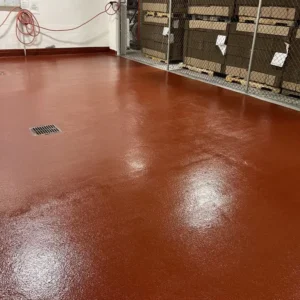
Their system also incorporates a broadcast aggregate during the slurry phase, which creates a built-in slip resistant texture. That texture is part of the flooring system itself rather than a coating applied on top, so it doesn’t wear away with cleaning or foot traffic over time. For kitchen staff working in wet conditions, that’s the kind of protection that actually prevents accidents rather than just looking good on a product specification sheet.
Who Does HPS Flooring Serve in New Jersey?
HPS Flooring serves commercial and industrial food service facilities exclusively. That focus matters enormously. It means their team isn’t splitting attention between residential remodels, garage floors, and commercial jobs. Every project they take on is a professional kitchen, food processing facility, or industrial food service environment. That specialization, built over 37 years since their founding in 1988, is reflected in the depth of knowledge their team brings to every installation.
For any food service operator looking for commercial kitchen flooring from a team that truly understands the environment, HPS Flooring serves areas including Montclair, Asbury Park, Morristown, Red Bank, and surrounding communities throughout New Jersey, New York, and Pennsylvania. Their free consultation process gives every potential client a clear picture of what their specific floor needs before any commitment is made.
How Quickly Can a Kitchen Be Back in Operation?
Downtime is money in the food service industry. Every hour your kitchen isn’t producing is revenue lost, and a flooring project that drags on for weeks isn’t acceptable for most operations. HPS Flooring typically completes kitchen-sized installations in approximately three days. Their team works flexible hours around each client’s production schedule, often completing phases of the installation during off hours or overnight to minimize the impact on daily operations.
The three day timeline includes surface preparation, slurry and aggregate application, and the final chemical resin topcoat. Each phase needs proper curing time before the next can begin, and the team manages that sequencing efficiently to keep the project on track. Once the topcoat has cured, the floor is ready for regular kitchen use and cleaning.
Conclusion
Finding the right flooring contractor for your commercial kitchen in New Jersey is a decision worth taking seriously. The floor your team stands on every day affects safety, sanitation, maintenance costs, and how easily you pass health inspections. Epoxy systems installed by experienced professionals deliver on every one of those fronts. With over 37 years of specialized commercial kitchen experience, HPS Flooring brings the expertise, equipment, and materials that food service operations throughout NJ genuinely need.
FAQ
What areas in NJ does HPS Flooring serve? HPS Flooring serves commercial kitchen clients throughout New Jersey including Montclair, Asbury Park, Morristown, Red Bank, and surrounding areas, as well as parts of New York and Pennsylvania.
Does epoxy flooring resist harsh kitchen cleaning chemicals? Yes. HPS Flooring’s resins are specifically formulated to withstand the harsh cleansers used daily in commercial food service environments without degrading over time.
Is a primer required before installing the epoxy system? No. Because HPS Flooring’s epoxy system has such a high adhesion rating, a primer coat is not required when the surface is properly prepared.